Best for Adhesives & Glue, Fasteners, Paint Accessories
Open mobile app

RIZTECHEveryday 7:00 AM - 6:00 PM
Hello! Need help? Don’t worry, I’ve got you. Tell me what’s up, and I’ll be happy to assist 💁
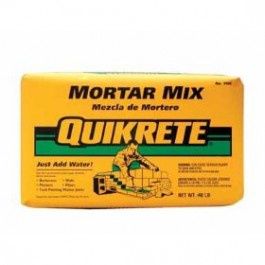
Type N is a general‑purpose, medium‑strength mortar used for non‑load‑bearing masonry work. It’s designed for brick, block, stone, and wall joint repairs.
Strength: ~750 PSI (medium strength) Workability: Smooth, easy to spread Bonding: Good for vertical walls and above‑grade work
Bricklaying
Block laying
Stone veneer (non‑structural)
Repointing / tuckpointing
Repairing wall joints
Garden walls
Chimney exterior repairs (non‑structural)
Parapet walls
Interior masonry
Sidewalks
Slabs
Footings
Structural walls
Heavy load‑bearing work
Because Type N is mortar, not concrete.
Type N mortar mix contains:
Portland cement
Hydrated lime (gives smoothness & flexibility)
Sand (graded for mortar)
This blend gives it workability + medium strength, perfect for bonding bricks/blocks.
Standard ratio: Just add clean water until you get a peanut‑butter‑like consistency.
Typical water amount: ~5–6 quarts per 60 lb bag (varies by weather)
Working time: ~60–90 minutes depending on temperature
Above‑grade walls
Normal weather conditions
Areas needing flexibility (lime helps absorb movement)
Residential masonry
| বিষয় | Mortar Mix | Sand Mix |
|---|---|---|
| উপাদান | সিমেন্ট + বালি + লাইম | সিমেন্ট + বালি |
| শক্তি | bonding strength বেশি | compressive strength বেশি |
| ব্যবহার | ইট/ব্লক বসানো | কংক্রিট প্যাচ/টপিং |
| পুরুত্ব | জয়েন্ট ও পাতলা bonding | ½"–2" লেয়ার |
| টেক্সচার | আঠালো, sticky | ঘন, smooth finish |
Mortar Mix is a blend of:
Portland cement
Hydrated lime (optional depending on type)
Sand
Water (added during mixing)
It is designed to bond masonry units together and for trowel-applied applications.
Mortar Mix is not the same as concrete (which has gravel).
Mortar = Smooth for bonding
Concrete = Strong for structural slabs
Mortar Mix is primarily used to set and bond bricks:
Brick walls
Garden walls
Steps
Fireplaces
Structural brickwork
➡️ Provides strong adhesion between each brick.
Mortar Mix is used to build:
Block walls
Basement walls
Retaining walls
Utility sheds
Boundary walls
➡️ Smooth consistency helps spread easily on block surfaces.
Used to install:
Natural stone
Manufactured stone veneer
Decorative stones
Landscaping stone blocks
➡️ Mortar fills uneven gaps and locks stone in place.
Mortar Mix is essential for:
Fixing loose bricks
Repairing deteriorated joints
Restoring old walls
Weather-damaged mortar
➡️ Repointing preserves structural integrity.
Mortar is used under:
Patio stones
Walkway pavers
Garden edging stones
Outdoor decorative stones
➡️ Keeps stones stable and prevents shifting.
Mortar Mix can repair:
Holes in masonry walls
Cracked mortar joints
Minor block/brick damage
Edge rebuilding
➡️ Smooth texture spreads easily for patching.
Used in:
Building brick chimneys
Repairing firebox mortar joints (with heat-rated mortar)
Outdoor fireplace masonry
➡️ Choose high-heat mortar for firebox interiors.
Mortar mix can be used for:
Exterior scratch coat
Brown coat
Under stucco finish layers
➡️ Creates strong, level base.
Mortar is used for:
Filling gaps in rock work
Voids behind stones
Large cavity repair
➡️ Not for tile grout — tile uses its own grouts.
| Type | Best Use |
|---|---|
| Type N (general-purpose) | Walls, chimneys, interior & exterior masonry |
| Type S (stronger) | Foundation walls, retaining walls, load-bearing work |
| Type M (highest strength) | Stone foundations, heavy loads, below-grade work |
| Type O (low strength) | Interior repairs, historic masonry restoration |
Type N = Medium‑strength mortar → Brick/block above‑grade
Type S = High‑strength mortar → Structural walls, below‑grade
Sand/Topping Mix = Thin concrete → ½–2 inch repairs, leveling, shower pans
| Feature | Type N Mortar | Type S Mortar | Sand/Topping Mix |
|---|---|---|---|
| Strength (PSI) | ~750 PSI | 1,800–2,300 PSI | ~4,000 PSI (varies) |
| Contains Lime? | Yes | Yes | No |
| Contains Gravel? | No | No | No |
| Workability | Smooth, easy | Stiffer, stronger | Smooth, packable |
| Best For | Brick, block, veneer, repointing | Structural walls, retaining walls, foundations | Thin concrete repairs (½–2"), leveling, shower pans |
| Above‑Grade Use | ✔️ Best | ✔️ Strong | ✔️ |
| Below‑Grade Use | ❌ Not recommended | ✔️ Designed for it | ✔️ (non‑structural) |
| Load‑Bearing | ❌ No | ✔️ Yes | ✔️ (thin concrete only) |
| Finish Texture | Smooth mortar | Strong mortar | Smooth concrete |
| Max Thickness | Mortar joints | Mortar joints | 2 inches |
| Mix Type | Cement + lime + sand | Cement + lime + sand | Cement + sand (3:1) |
Brick or block walls above ground
Repointing / tuckpointing
Stone veneer (non‑structural)
Chimney exterior repairs
You need flexibility + medium strength
Bangla: ইট‑ব্লক বসানো, জয়েন্ট রিপেয়ার—লোড‑বেয়ারিং নয়।
Retaining walls
Foundations
Below‑grade masonry
Structural block walls
High wind / seismic areas
Bangla: স্ট্রাকচারাল দেয়াল, বেসমেন্ট, রিটেইনিং ওয়াল—উচ্চ শক্তির কাজ।
Thin concrete repairs (½–2")
Steps, stoops, surface patching
Leveling uneven concrete
Shower pan dry‑pack
Tile underlayment
Bangla: পাতলা কংক্রিট রিপেয়ার, লেভেলিং, শাওয়ার প্যান—গ্রাভেল ছাড়া কংক্রিট।
N = Normal mortar S = Strong mortar Sand Mix = Thin concrete
Avoid using regular mortar for:
Setting fence posts
Building slabs or footings
Anchoring bolts
Sidewalks or driveways
Thin plaster finishing
Tile installation
Use Concrete Mix or Thinset instead depending on job.
| Material | Use | Strength | Sidewalk Suitable? |
|---|---|---|---|
| Portland Cement | Ingredient for concrete | Very strong | ✔️ Yes (when mixed with sand + gravel) |
| Concrete Mix (4000 PSI) | Ready sidewalk mix | High strength | ✔️ Best choice |
| Masonry Cement | Mortar, brick, block | Low strength | ❌ No |
| Mortar Mix | Brick joints | Very low strength | ❌ No |
| Sand Mix | Thin patches | No gravel | ❌ No |
Best for Adhesives & Glue, Fasteners, Paint Accessories
Hello! Need help? Don’t worry, I’ve got you. Tell me what’s up, and I’ll be happy to assist 💁