Best for Adhesives & Glue, Fasteners, Paint Accessories
Open mobile app

RIZTECHEveryday 7:00 AM - 6:00 PM
Hello! Need help? Don’t worry, I’ve got you. Tell me what’s up, and I’ll be happy to assist 💁
Below is a concise, practical guide to joint compound (drywall mud): what it does, the main types, typical uses, pros and cons, and quick application and storage tips.
Joint compound is a gypsum‑based paste used to finish drywall seams, embed tape, cover fastener heads, patch holes, and skim coat walls and ceilings to a paint‑ready surface. It comes premixed (ready to use) or as a setting‑type powder you mix with water. Typical applications include new drywall finishing, repairs, skim coats, and feathering transitions between old and new surfaces.
| Type | Form | Primary uses | Pros | Cons |
|---|---|---|---|---|
| All‑Purpose (premixed) | Ready‑mixed bucket | Taping, embedding paper tape, general finishing | Versatile; good bond; ready to use | Heavier to sand than topping; longer dry time |
| Lightweight (premixed) | Ready‑mixed | Second/third coats; repairs | Easier sanding; less shrinkage | Slightly weaker tape bond than all‑purpose |
| Topping (premixed) | Ready‑mixed | Final finish coats only | Very easy to sand; smooth finish | Not for embedding tape; weaker for structural fills |
| Setting‑Type (powder / hot mud) | Powder mixed with water (20–90 min set) | First coats, deep fills, fast turnaround | Fast setting; minimal shrinkage; strong bond | Harder to sand; limited working time |
| Dust‑Control / Low‑Dust | Ready‑mixed | Occupied homes; interior repairs | Less airborne dust when sanding | Slightly different sanding feel; variable availability |
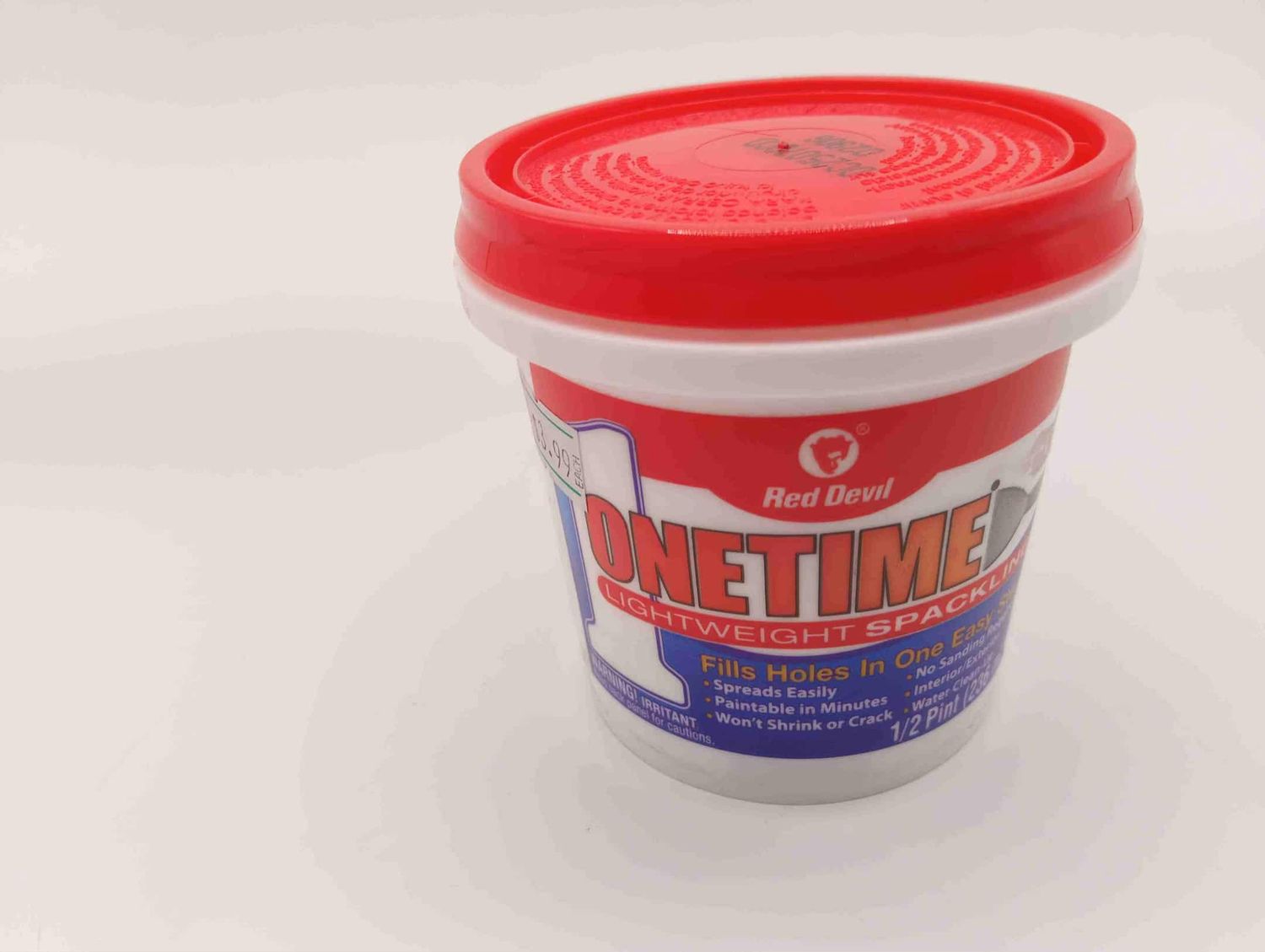
| Patch / Spackle | Small tubs/tubes | Small holes, dings, quick repairs | Convenient for tiny fixes; fast | Not suitable for full seams or large patches |
(Each cell is one line for quick scanning.)
Taping new seams: Use all‑purpose or setting‑type for embedding tape; setting‑type is preferred when you need strength or quick recoat.
Second and third coats: Use lightweight or topping for easier sanding and a smooth finish.
Deep repairs or fast jobs: Use setting‑type (choose the appropriate set time: 20, 45, 90 minutes).
Small holes and dings: Use patch/spackle for convenience.
Mixing: Premixed compounds usually only need a quick stir; setting‑type powders must be mixed to manufacturer specs and used within their working time.
Taping: Embed tape with a thin coat, then apply successive wider coats, feathering each coat beyond the previous edge.
Sanding: Use progressively finer grit; consider dust‑control products or a vacuum‑attached sander to reduce airborne dust.
Skim coating: Use topping or lightweight for the final skim coat to achieve a smooth surface.
Ventilation and dust control: Sanding creates gypsum dust; use eye protection, a dust mask or respirator, and ventilate the area. Consider low‑dust formulations for occupied spaces.
Storage: Keep premixed compound sealed and frost‑free; setting‑type powders must be kept dry and airtight.
Shelf life: Premixed tubs can spoil if frozen or contaminated; follow manufacturer guidance on reuse.
A common retail example is USG Sheetrock 4.5 gal All Purpose Ready‑Mixed Joint Compound, a versatile premixed option suitable for many finishing steps. Use it for embedding tape and general finishing; for faster set times or deep fills, choose a setting‑type product instead.
Project stage: New drywall taping vs. final skim vs. patching.
Time constraints: Need fast set? Choose setting‑type.
Sanding preference: Want easy sanding? Choose topping or lightweight.
Work environment: Occupied home or dusty area? Consider dust‑control formulas.
Budget and skill: Premixed is easier for DIY; pros often prefer powders for control.
Best for Adhesives & Glue, Fasteners, Paint Accessories
Hello! Need help? Don’t worry, I’ve got you. Tell me what’s up, and I’ll be happy to assist 💁