Best for Adhesives & Glue, Fasteners, Paint Accessories
Open mobile app

RIZTECHEveryday 7:00 AM - 6:00 PM
Hello! Need help? Don’t worry, I’ve got you. Tell me what’s up, and I’ll be happy to assist 💁
40 Bags in a Pallet
Portland Cement A pure binder. It’s the main ingredient used to make concrete (cement + sand + gravel + water). Very strong, high PSI.
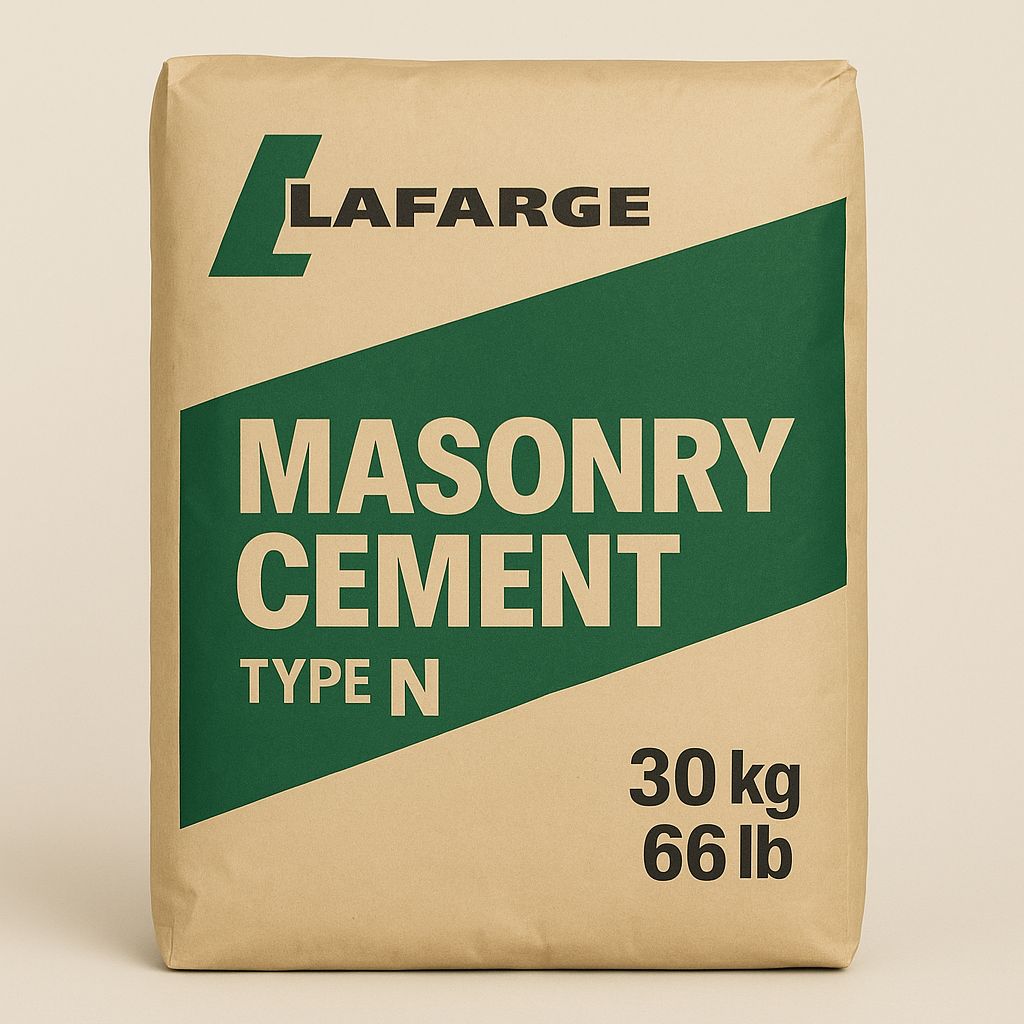
Masonry Cement A blended product — Portland cement + lime + plasticizers. Designed to make mortar (cement + sand + water). Smooth, sticky, flexible — but not as strong.
Sidewalks
Driveways
Foundations
Slabs
Heavy-duty patches
Any job needing 3000–5000 PSI strength
Bricklaying
Block work
Stone setting
Stucco
Tuckpointing
Joints between bricks/blocks
| Material | Typical Strength | Suitable For |
|---|---|---|
| Portland Cement (Type I/II) | Very high PSI | Concrete, slabs, sidewalks |
| Masonry Cement (Type N/S/M) | Much lower PSI | Mortar, joints, stucco |
Why? Masonry cement contains lime, which makes it smooth and workable — but reduces compressive strength.
It cannot reach 3000–4000 PSI
It will crack, powder, and fail
It is made for bonding bricks, not bearing loads
For sidewalks, always use:
4000 PSI concrete mix, or
Portland cement + sand + gravel (contractor mix)
Portland Cement = Concrete Masonry Cement = Mortar
Portland → শক্ত কাজ Masonry → ইট–ব্লক কাজ
Masonry cement is designed for:
Mortar
Bricklaying
Block work
Stucco
It contains lime, which makes it smooth and sticky — great for mortar, but too weak for sidewalks. It cannot reach 3000–4000 PSI, so it will crack and fail.
| Material | Use | Strength | Sidewalk Suitable? |
|---|---|---|---|
| Portland Cement | Ingredient for concrete | Very strong | ✔️ Yes (when mixed with sand + gravel) |
| Concrete Mix (4000 PSI) | Ready sidewalk mix | High strength | ✔️ Best choice |
| Masonry Cement | Mortar, brick, block | Low strength | ❌ No |
| Mortar Mix | Brick joints | Very low strength | ❌ No |
| Sand Mix | Thin patches | No gravel | ❌ No |
Masonry Cement is a blended product made of:
Portland cement
Limestone
Plasticizers
Air-entraining additives
When mixed with sand + water, it becomes mortar used for masonry work.
Masonry Cement itself is NOT concrete. It is used to make mortar, not slabs.
Masonry cement is primarily used to produce mortar for:
Brick walls
Partitions
Garden walls
Chimneys
Decorative brick projects
➡️ It gives smooth, workable mortar that grips brick surfaces.
Used for:
Block walls
Basements
Foundations (non-structural)
Utility rooms
Retaining walls (light/medium)
➡️ Produces Type N or Type S mortar depending on mix ratio.
Masonry cement mortar is used to set:
Natural stones
Stone veneers
Flagstones
Manufactured stone panels
➡️ Smooth consistency helps fill uneven gaps.
Used for:
Replacing old, cracked, or falling mortar
Fixing loose bricks
Restoring historic masonry
Weather-damaged joints
➡️ Flexibility and adhesion make it ideal for repointing work.
Masonry cement is used to make mortar base layers:
Scratch coat
Brown coat
Under final stucco finish
➡️ Provides strong bonding for stucco systems.
Used for:
Bedding pavers
Locking edging stones
Installing garden borders
Pathway stones
➡️ Mortar made from masonry cement keeps stones from shifting.
Ideal for:
Filling holes in block walls
Rebuilding broken corners
Repairing mortar gaps around pipes
Patching brick faces
➡️ Very workable mix for hand repairs.
Masonry cement is commonly sold as:
| Type | Strength | Uses |
|---|---|---|
| Type N | Medium | General brick/block work, above-grade walls |
| Type S | Stronger | Foundation walls, retaining walls, exterior load-bearing |
| Type M | Highest strength | Stone foundations, heavy loads, below-grade |
Quikrete Masonry Cement
Sakrete Masonry Cement
Lehigh Hanson / Eagle Masonry Cement
Lafarge Masonry Cement
Argos Masonry Cement
CEMEX Masonry Cement
Avoid using it for:
Concrete slabs
Sidewalks
Posts & footings
Anchoring bolts
Driveways
Anything requiring aggregate/gravel
Type N = Medium‑strength mortar → Brick/block above‑grade
Type S = High‑strength mortar → Structural walls, below‑grade
Sand/Topping Mix = Thin concrete → ½–2 inch repairs, leveling, shower pans
| Feature | Type N Mortar | Type S Mortar | Sand/Topping Mix |
|---|---|---|---|
| Strength (PSI) | ~750 PSI | 1,800–2,300 PSI | ~4,000 PSI (varies) |
| Contains Lime? | Yes | Yes | No |
| Contains Gravel? | No | No | No |
| Workability | Smooth, easy | Stiffer, stronger | Smooth, packable |
| Best For | Brick, block, veneer, repointing | Structural walls, retaining walls, foundations | Thin concrete repairs (½–2"), leveling, shower pans |
| Above‑Grade Use | ✔️ Best | ✔️ Strong | ✔️ |
| Below‑Grade Use | ❌ Not recommended | ✔️ Designed for it | ✔️ (non‑structural) |
| Load‑Bearing | ❌ No | ✔️ Yes | ✔️ (thin concrete only) |
| Finish Texture | Smooth mortar | Strong mortar | Smooth concrete |
| Max Thickness | Mortar joints | Mortar joints | 2 inches |
| Mix Type | Cement + lime + sand | Cement + lime + sand | Cement + sand (3:1) |
Brick or block walls above ground
Repointing / tuckpointing
Stone veneer (non‑structural)
Chimney exterior repairs
You need flexibility + medium strength
Bangla: ইট‑ব্লক বসানো, জয়েন্ট রিপেয়ার—লোড‑বেয়ারিং নয়।
Retaining walls
Foundations
Below‑grade masonry
Structural block walls
High wind / seismic areas
Bangla: স্ট্রাকচারাল দেয়াল, বেসমেন্ট, রিটেইনিং ওয়াল—উচ্চ শক্তির কাজ।
Thin concrete repairs (½–2")
Steps, stoops, surface patching
Leveling uneven concrete
Shower pan dry‑pack
Tile underlayment
Bangla: পাতলা কংক্রিট রিপেয়ার, লেভেলিং, শাওয়ার প্যান—গ্রাভেল ছাড়া কংক্রিট।
N = Normal mortar S = Strong mortar Sand Mix = Thin concrete
Type N Masonry Cement: ~750 PSI
Type S Masonry Cement: 1,800–2,300 PSI
Meaning: Type S is more than double the strength of Type N.
Both are blends of:
Portland cement
Hydrated lime
Plasticizers
Air‑entraining agents
But:
Type S has more cement + less lime → stronger, stiffer
Type N has more lime → smoother, easier to work with
Brick walls above grade
Block walls above grade
Stone veneer
Chimney exterior
Repointing joints
General non‑structural masonry
Bangla: ইট‑ব্লক বসানো, ভেনিয়ার, রিপয়েন্টিং—লোড‑বেয়ারিং নয়।
Foundations
Retaining walls
Structural block walls
Below‑grade masonry
High‑wind / seismic areas
Driveway/walkway edges
Bangla: স্ট্রাকচারাল দেয়াল, বেসমেন্ট, রিটেইনিং ওয়াল—উচ্চ শক্তির কাজ।
Type N: Above‑grade only
Type S: Above‑grade + below‑grade (handles soil pressure)
Type N: Smooth, creamy, easy to spread
Type S: Stiffer, harder to spread but much stronger
N = Normal mortar (medium strength)
S = Strong mortar (high strength)
Best for Adhesives & Glue, Fasteners, Paint Accessories
Hello! Need help? Don’t worry, I’ve got you. Tell me what’s up, and I’ll be happy to assist 💁